Marble Away: Marble Sort Drop
- 4.9
- Rating
- 100.00K
- Installs
- Free
- Price

 Analysis by App-foxy
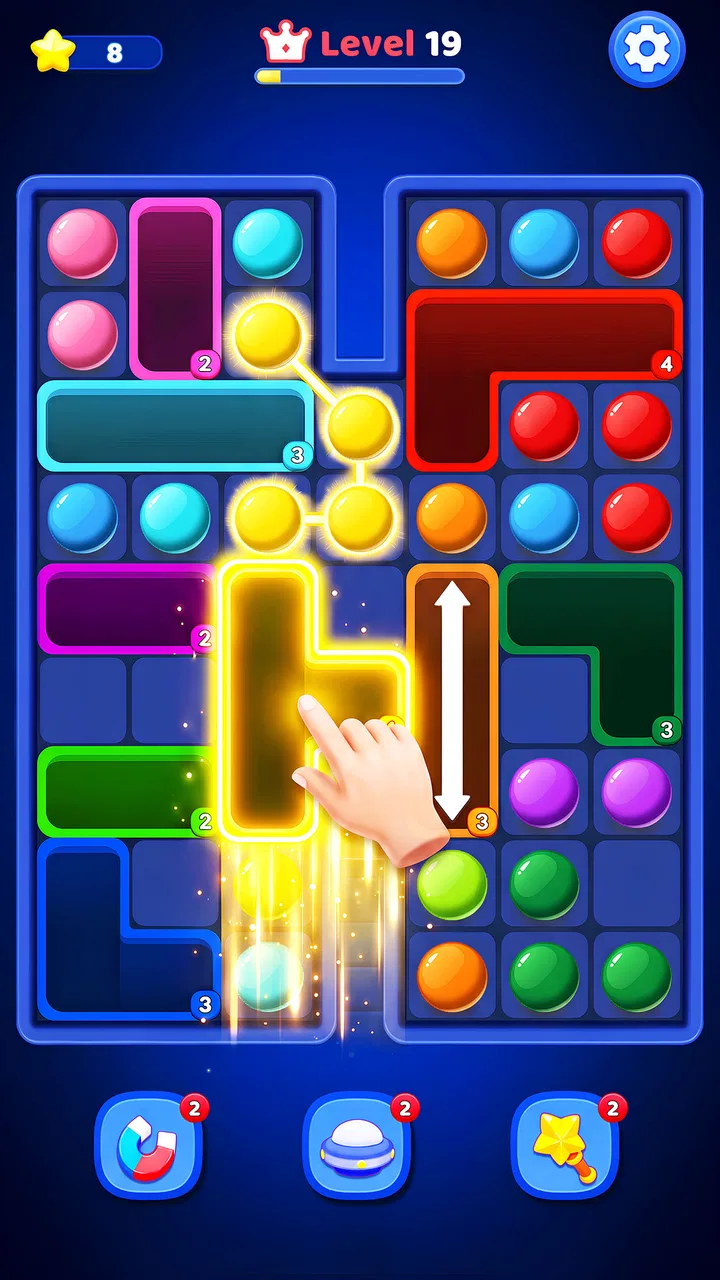
I reached for Marble Away: Marble Sort Drop expecting a simple color puzzle, and that is exactly where its appeal starts. It puts colorful marbles in front of me, asks me to sort them through careful drops and matches, and avoids the pressure of a countdown. That combination makes it unusually easy to understand within moments, while still leaving enough room for mistakes, planning, and the satisfying feeling of rescuing a messy board.
This is a free puzzle game from Mind Crush, aimed at Everyone and available for devices running Android 6.0 or later. Its current version is 1.600, and the game has already passed 100K+ installs with a 4.9 average from around 8.7K ratings. Those figures suggest that its straightforward idea has found a receptive audience, but the important question for me is not popularity. It is whether the game works when I only have a minute, whether I can safely stop in the middle of a thought, and whether the basic sorting loop remains enjoyable after the first few boards.
Why the first few moves feel so approachable
The opening experience is built around a familiar puzzle language: colors need to be organized, drops need to land usefully, and matching groups should gradually turn disorder into a clean result. I never felt that I had to learn a complicated rulebook before playing. The visual goal is immediate, which is valuable in a mobile game meant to fill small gaps in the day.
You May Also Like

 Blood Strike: 2.5 Anniversary
Blood Strike’s Loadouts Turn Every Drop Into a Tactical Gamble
A close look at Blood Strike’s custom loadouts: how fast access to signature weapons reshapes its battle royale rhythm, rewards preparation, and narrows the gap between fights.

 Pandora - Music & Podcasts
Pandora’s Music Is Easy to Start, but Harder to Recover
Pandora’s strength is its low-effort path from a seed to a station. Its weak spot is how much confidence it asks you to place in connection, setup, and quiet recovery.

 8 Ball Pool
 Is Built on Rivalries, Rematches, and Routine
A close look at the rivalries, rematches, shared routines, and unanswered safety questions that turn a quick pool match into a persistent mobile community.

 Samsung Music
’s Quiet Strength Is Playing What You Already Own
Its reach comes less from spectacle than from dependable access to a personal library. That simplicity is both the app’s strongest retention engine and its ceiling.

 AccuWeather: Weather Radar
AccuWeather Review: A Quick, Clear Forecast for Everyday Decisions
For everyday plans, the best forecast is the one you can understand quickly. AccuWeather makes rain timing, radar, and local conditions easy to act on, with a few trade-offs.

 Hill Climb Racing
Why Hill Climb Racing Still Turns Crashes Into One More Run
A tiny car, a bumpy hill and one more upgrade: Hill Climb Racing keeps resurfacing because its simple chaos makes every near-miss feel personal.
More From Our News Desk
View All News


The no-timer design is especially important. In many color-sorting games, a clock changes a calm logic exercise into a race against the interface. Here, I can look at the board, consider what a move will do, and choose a safer option without feeling that the game is punishing me for thinking. That does not remove all tension. A careless drop can still make the remaining arrangement harder, but the tension comes from the board rather than from a countdown.
I like that distinction because it makes the game suitable for different moods. When I want a quick distraction, I can act on the obvious move. When I have more patience, I can inspect the available colors and try to preserve useful space. The same basic interaction supports both styles, so the game does not force me into a single pace.
There is also a nice physical quality to the marble theme. A color match is easier to read when the pieces look like objects being gathered and arranged rather than abstract symbols. That matters during short sessions: I can understand the state of the puzzle at a glance instead of translating a dense set of icons before every move.
A better way to approach each board
My strongest practical tip is to avoid treating the first available match as automatically correct. A move can look productive while using the space needed for a more important color later. I get better results when I first identify which colors are blocking access, then decide whether a small temporary arrangement will create a cleaner sequence.
Another useful habit is to think about empty room before thinking about speed. In a marble-drop puzzle, open space is not merely a visual convenience; it is what gives me options when the board becomes crowded. I try to preserve at least one flexible area rather than filling every possible position immediately. This makes the later part of a level less dependent on luck and gives me a chance to recover from an imperfect decision.
I also find it helpful to separate “progress” from “completion.” A move that gathers several matching marbles may feel exciting, but a quieter move that keeps the board open can be strategically stronger. That trade-off is where the game becomes more than a quick color-matching toy. It asks me to value the next few moves, not just the move that looks best right now.
How the session rhythm works in real life
The game fits naturally into short, interrupted play. I can begin without a long setup, understand the immediate objective, and make progress through individual decisions rather than needing a large uninterrupted block of time. That makes it a good companion for a waiting room, a short break, or the few minutes before another task begins.
A realistic example is a commute with only a small amount of attention available. I might start a board while waiting for transport, make several deliberate drops, and stop as soon as I need to look up. Because there is no timer pushing the board forward, I do not feel forced to rush through a move just because my attention is divided. The game suits that kind of fragmented use better than a fast arcade puzzle or a level that demands continuous concentration.
It also works during a brief mental reset after work. I can focus on the colors and positions instead of reading dialogue, following a story, or remembering a complicated chain of objectives. The task is small enough to be calming, but not so automatic that my hands have nothing to do. For me, that balance is the main reason to keep it installed.
There is a trade-off, though. Players who want a strong sense of urgency may find the relaxed rhythm too gentle. Without a clock, the game does not create the same adrenaline as a timed match-three challenge. It is better at offering controlled concentration than at delivering a dramatic burst of pressure.
Why the lack of a timer changes the experience
Removing time pressure gives the game a useful interruption tolerance. If I pause to answer a message or put the phone down, I am not returning to a board that has changed while I was away. More importantly, I can stop at a moment when the puzzle is still unresolved without feeling that I have wasted a run.
This makes it easier to play thoughtfully on a phone with distractions around me. A notification, a conversation, or a change in surroundings does not automatically turn a good attempt into a failed one. I still need to remember the arrangement when I return, but the game lets me resume the mental process instead of demanding an immediate reaction.
For the best results, I pause after a natural decision rather than halfway through a complicated plan. Before leaving, I take a quick look at which color I was trying to expose and where the useful open space remains. That small habit makes returning much easier, especially when I have left a board unfinished for more than a few minutes.
The lack of a timer does not mean every move is consequence-free. If I repeatedly make impulsive drops, the board can become awkward and reduce my choices. The difference is that I have time to notice the problem and correct my approach. The game rewards patience without making patience feel like a requirement for every single move.
Where the replay value comes from
The central loop is intentionally narrow: sort, drop, match, and continue. That focus is a strength during the first sessions because there is little friction between opening the game and playing. It is also the source of the main limitation. If I need constant novelty, a large story, or a variety of unrelated modes, this is not the right kind of puzzle.
For me, replay value comes from improving decisions rather than discovering a new system each time. I can revisit the same style of problem with a different attitude: play more cautiously, preserve space earlier, or look for a sequence that avoids creating a difficult pile. The pleasure is similar to tidying a cluttered desk, except the order of actions matters and a seemingly neat arrangement may still leave the wrong color trapped.
That makes the game a better fit for players who enjoy refinement. I like seeing whether I can solve a board with fewer desperate moves, not because the game needs to become a competition, but because a cleaner solution feels more satisfying. Someone who prefers frequent surprises may find that kind of repetition limited after the novelty of the marble presentation fades.
One non-obvious benefit is that the no-timer structure makes experimentation less stressful. I can test a move, observe how the colors settle, and learn from the resulting shape instead of treating every attempt as a high-stakes performance. That encourages a gradual improvement loop: notice a mistake, understand why it narrowed the board, and use that lesson on the next puzzle.
There is also a useful distinction between relaxing repetition and empty repetition. The game feels worthwhile when I am actively reading the layout and making a choice. It feels less rewarding when I start dropping marbles automatically without considering the consequences. In other words, the replay value depends partly on how deliberately I play; the design gives me room to think, but it cannot create interest if I stop engaging with the arrangement.
Who will enjoy it most
I would recommend this puzzle to people who like color organization, gentle logic, and mobile games that can be played in small pieces. It is particularly suitable for anyone who dislikes countdowns or feels that timed challenges turn relaxing games into chores. The Everyone rating also makes its presentation approachable for a broad audience.
It is a good choice for a player who wants an immediate activity rather than a large commitment. There is no need to memorize a story or build a long-term strategy before the basic pleasure becomes clear. The game can sit alongside more demanding titles as a quieter option for moments when I want to use my attention without exhausting it.
I would be more cautious about recommending it to someone who wants deep competitive play, elaborate character progression, or a constantly changing set of mechanics. A traditional match-three game may be better for fast chain reactions, while a more advanced logic title may offer tougher multi-step planning. Marble Away sits between those extremes: more thoughtful than a purely reflexive color game, but more immediately accessible than a demanding brain teaser.
Small frictions worth considering
The free entry point is convenient, but in-app purchases range from $1.99 to $69.99 per item. That is worth keeping in mind before spending, particularly if the game becomes a regular habit. I would begin with the free experience and decide later whether any optional purchase genuinely improves the way I play, rather than treating an offer as necessary for enjoying the basic puzzle.
The game’s simplicity can also feel repetitive. The same core action that makes it easy to start may eventually make sessions feel familiar. I do not see that as a flaw for a short-session puzzle, but it does mean I would not choose it as my only mobile game. It works best as part of a rotation, especially if I alternate it with something more narrative, competitive, or mechanically varied.
Another limitation is that a calm interface can make a poor decision feel deceptively harmless. Because there is no countdown, I may relax so much that I stop planning. When that happens, the board can become crowded through a series of individually reasonable moves. The solution is not to play quickly; it is to keep checking whether each drop preserves future options.
The current version, 1.600, runs on Android 6.0 or later, which makes it accessible to a wide range of older devices. That broad compatibility is useful for people who keep a secondary phone for casual gaming. Still, the experience will depend on how comfortable the individual device is for seeing and controlling the marble layout, so players with very small screens may need to pay closer attention to the board before committing to a move.
How I would fit it into a daily routine
I would use it in short, intentional windows rather than opening it whenever I am trying to avoid a task. A few minutes during a break gives the game a clear purpose: complete a small mental reset, then put the phone away. Because the boards do not rely on a timer, I can also use it before bed when I want something quieter than a competitive game.
For a longer session, I would take a brief pause between boards instead of playing on autopilot. That keeps the sorting loop from becoming mechanical and gives me a chance to notice which decisions were actually effective. If I begin making moves without looking ahead, that is usually my signal to stop or switch activities rather than force more play.
For younger or less experienced puzzle players, I would emphasize the value of looking for space before matching. For experienced players, I would suggest setting personal goals such as avoiding unnecessary reshuffling of the board or solving while keeping a flexible area available. These goals add structure without pretending that the game is a competitive strategy platform.
My casual verdict after playing
Marble Away: Marble Sort Drop succeeds because it understands the value of a small, readable puzzle. The marbles are easy to interpret, the color-matching objective is immediate, and the absence of a timer lets me play at the speed the moment allows. I can enjoy a quick burst, stop when interrupted, and return without feeling that the game has demanded more attention than I wanted to give.
Its strongest quality is not complexity but control. I decide whether a session is brisk or thoughtful, and I can make a mistake without the added frustration of a ticking clock. The best moments come when I resist the obvious match, preserve room, and watch a later sequence become possible because of that earlier restraint.
The limitations are equally clear. The focused loop may not hold the attention of players who need frequent new mechanics, and the purchase range means I would approach optional spending carefully. It is also not the ideal alternative for someone seeking intense competition or a rich progression system. Those players should look toward faster match puzzles or deeper logic games instead.
For everyone else, I think this is a pleasant recommendation: a free puzzle from Mind Crush that is particularly well suited to interruptions, short breaks, and calm concentration. Its 4.9 average and more than 100K+ installs reflect strong interest, but my own reason to return is simpler. When I want a game that gives me an immediate task, lets me think without rushing, and does not punish me for putting the phone down, this marble-sorting experience fits the moment remarkably well.
FAQs for Marble Away: Marble Sort Drop
01What is the main objective of Marble Away: Marble Sort Drop?
The main objective of Marble Away: Marble Sort Drop is to sort and drop colorful marbles into corresponding tubes. Players must strategize the order of their moves to ensure each marble lands in the correct spot, enhancing problem-solving skills and providing an engaging puzzle experience.
02Is Marble Away: Marble Sort Drop suitable for all ages?
Yes, Marble Away: Marble Sort Drop is designed to be enjoyed by players of all ages. The intuitive controls and vibrant graphics make it accessible for younger players, while the increasing difficulty levels provide a challenge for adults, making it a fun and educational game for the entire family.
03Are there in-app purchases in Marble Away: Marble Sort Drop?
Marble Away: Marble Sort Drop offers in-app purchases that allow players to unlock additional features, levels, and customization options. While the core game is free to play, these purchases can enhance the gameplay experience but are not necessary to enjoy the game fully.
04How often are new levels added to the game?
The developers of Marble Away: Marble Sort Drop regularly update the game with new levels and challenges. These updates are aimed at keeping the gameplay fresh and engaging, ensuring players always have new puzzles to solve and goals to achieve, which helps maintain long-term interest.
05Can I play Marble Away: Marble Sort Drop offline?
Yes, Marble Away: Marble Sort Drop can be played offline, making it a great option for those looking to enjoy the game on the go or in areas with limited internet connectivity. However, some features like leaderboards and in-app purchases require an internet connection.
Pros
- Intuitive controls make gameplay easy.
- Visually appealing with vibrant graphics.
- Challenging puzzles keep users engaged.
- No intrusive ads disrupt the experience.
- Regular updates introduce new levels.
Cons
- Occasional lag on older devices.
- Limited free hints available.
- Soundtrack can become repetitive.
- Requires internet for some features.
- Small learning curve for beginners.

Marble Away: Marble Sort Drop
Gallery